Decoding the Brain’s Motivational Circuits
At the Costa Lab, we map the neural circuits (e.g. basolateral amygdala and nucleus accumbens) that drive reinforcement learning. This fundamental process dictates how organisms learn the value of stimuli and actions to shape their behavior (Averbeck and Costa, 2017).
Why focus on reinforcement learning? Because its solutions are computationally measurable and highly translatable. By evaluating identical tasks across humans, non-human primates, and rodents, we can rapidly forward- and back-translate our findings to identify novel targets for treating psychiatric disorders.
Bridging Systems Neuroscience and Clinical Intervention
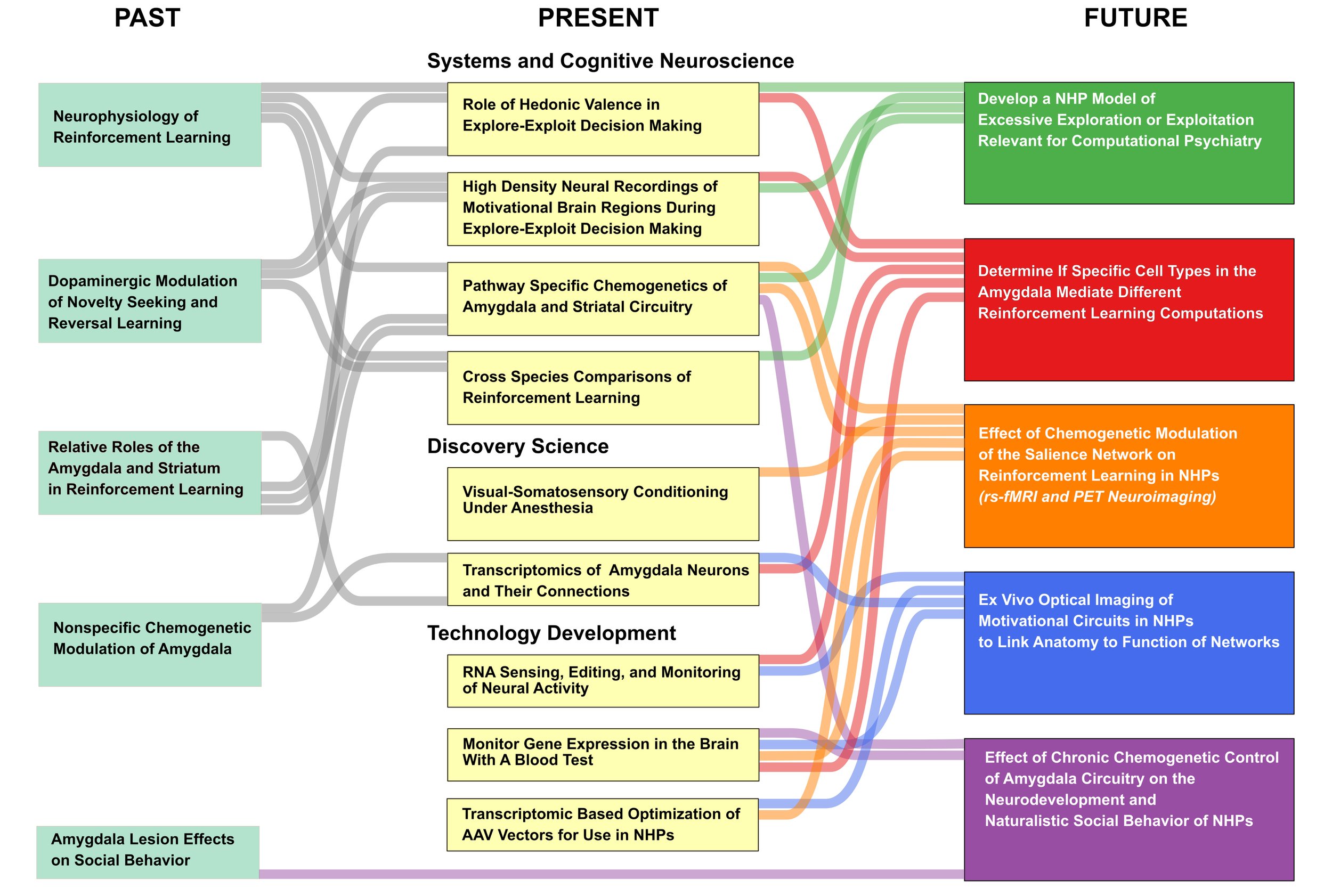
Our core mission is to close the gap between foundational bench research and life-changing clinical care through a synergistic, three-step strategy. First, we identify the specific circuits and computations driving learning and decision-making in animal models, with a strong focus on non-human primates. Next, we leverage state-of-the-art computational and molecular toolkits to manipulate these networks and decode their exact roles in behavior. Finally, we validate our findings in the real world by applying the exact same behavioral tasks and computational frameworks to relevant clinical populations.
Advanced Techniques for Drug Development & Neuromodulation
By combining cross-species behavioral tracking with a multidisciplinary toolkit, the Costa Lab hones in on precision molecular targets for drug development and neuromodulation. Our diverse methodological approach integrates psychopharmacology(Costa et al., 2014; 2016), neurophysiology(Costa et al., 2019; 2020; Tang, Costa, et al., 2022), chemogenetics(Lee, Romac et al., 2025), single-nucleus transcriptomics(Totty et al., 2025), and synthetic serum markers(Lee, Romac et al., 2025).
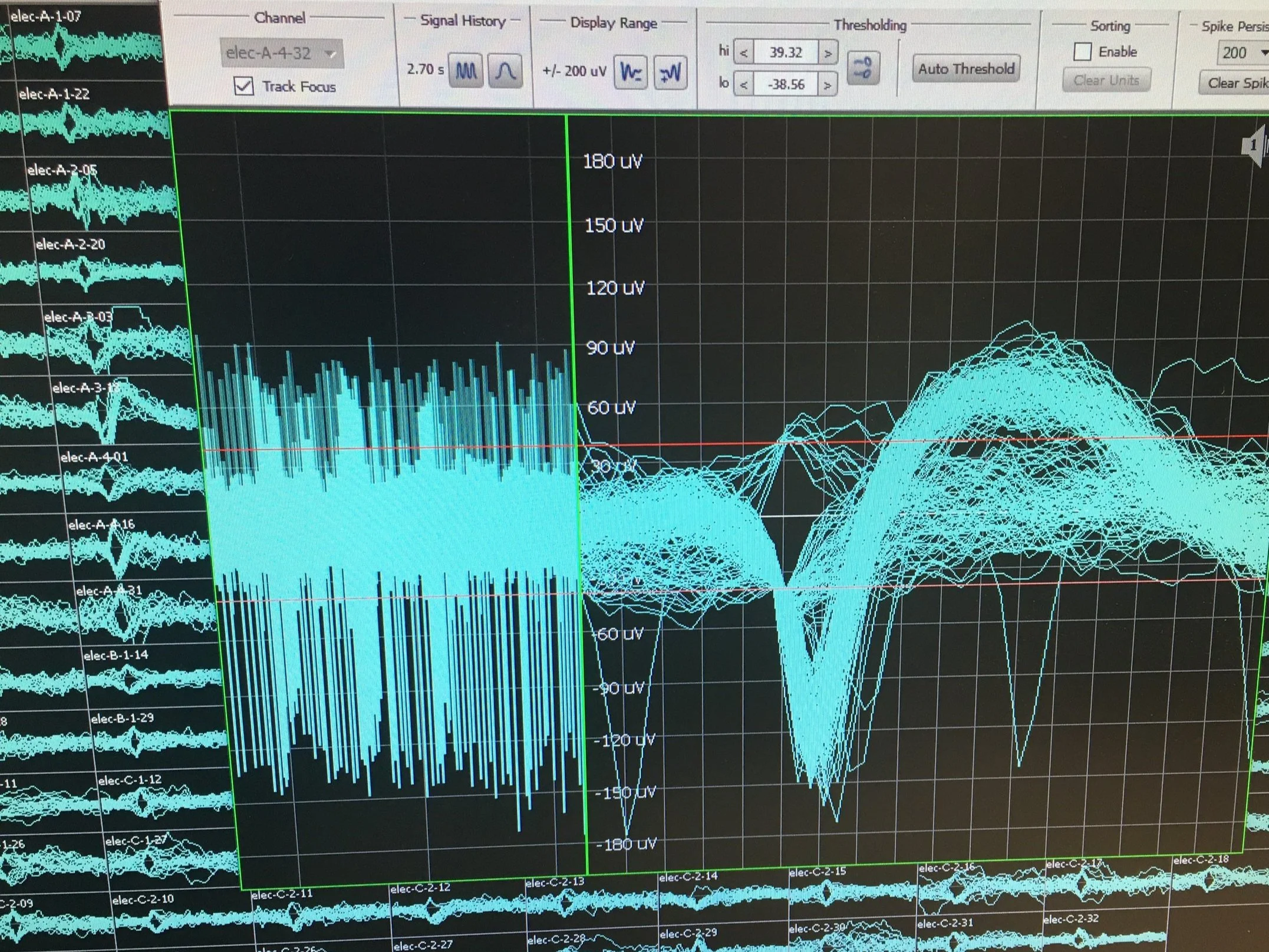
Neurophysiology of Reinforcement Learning
-
What are the mechanisms underlying changes in frontopolar cortex activity that prompt exploration?
Does the brain encode information relevant for managing explore-exploit tradeoffs differently when exploration is motivated by either appetitive or aversive consequence?
-
Amygdala
Caudate
Frontopolar Cortex
Nucleus Accumbens
Orbitofrontal Cortex
Putamen
Ventral Tegmental Area

Chemogenetic Modulation of Novelty Seeking
-
Do amygdala inputs to the ventral striatum control primates willingness to explore novel stimuli and actions?
Which motivational circuits in the primate brain separately regulate appetitive and aversive reinforcement learning?
-
Amygdala → Striatum
Anterior Cingulate Cortex → Frontopolar Cortex

Neuroanatomy with Molecular and Genetic Tools
-
How does the molecular heterogeneity of neuron types in the amygdala contribute to its diverse function and connectivity with other parts of the motivational brain?
Can we adapt molecular tools developed for viral connectomics to enable perturbations of brain networks and observe mesoscale changes in neural activity and behavior?
-
Amygdala
Ventral Pallidum
Dorsolateral Prefrontal Cortex
Lateral Intraparietal Area
Frontopolar Cortex
Orbitofrontal Cortex
Dorsal Anterior Cingulate Cortex
Subgenual Anterior Cingulate Cortex
Insula